MLB Home Run Prop Bets: Finding Value in the Long Ball Market
 Available in US
The Night I Learned Home Runs Are Not Random
I had always treated home run props like lottery tickets — fun, unpredictable, essentially a coin toss. Then I spent a winter digging through three years of batted ball data and discovered something that changed my approach entirely. The players who hit home runs at higher-than-expected rates share a specific set of characteristics, and those characteristics are measurable before the game starts. Home run props are not lottery tickets. They are mispriced options with identifiable value.
The market prices a batter’s home run prop primarily on his season-long home run rate. If a player has hit 30 home runs in 550 at-bats, the sportsbook calculates his per-game probability at roughly one home run every 4.4 games and sets the odds accordingly. What the market underweights is the matchup-specific and environment-specific data that moves that probability dramatically in either direction on any given night.
See also: pair home run props with pitcher strikeout props for a full game build.
Exit Velocity, Launch Angle and the Physics of Leaving the Park
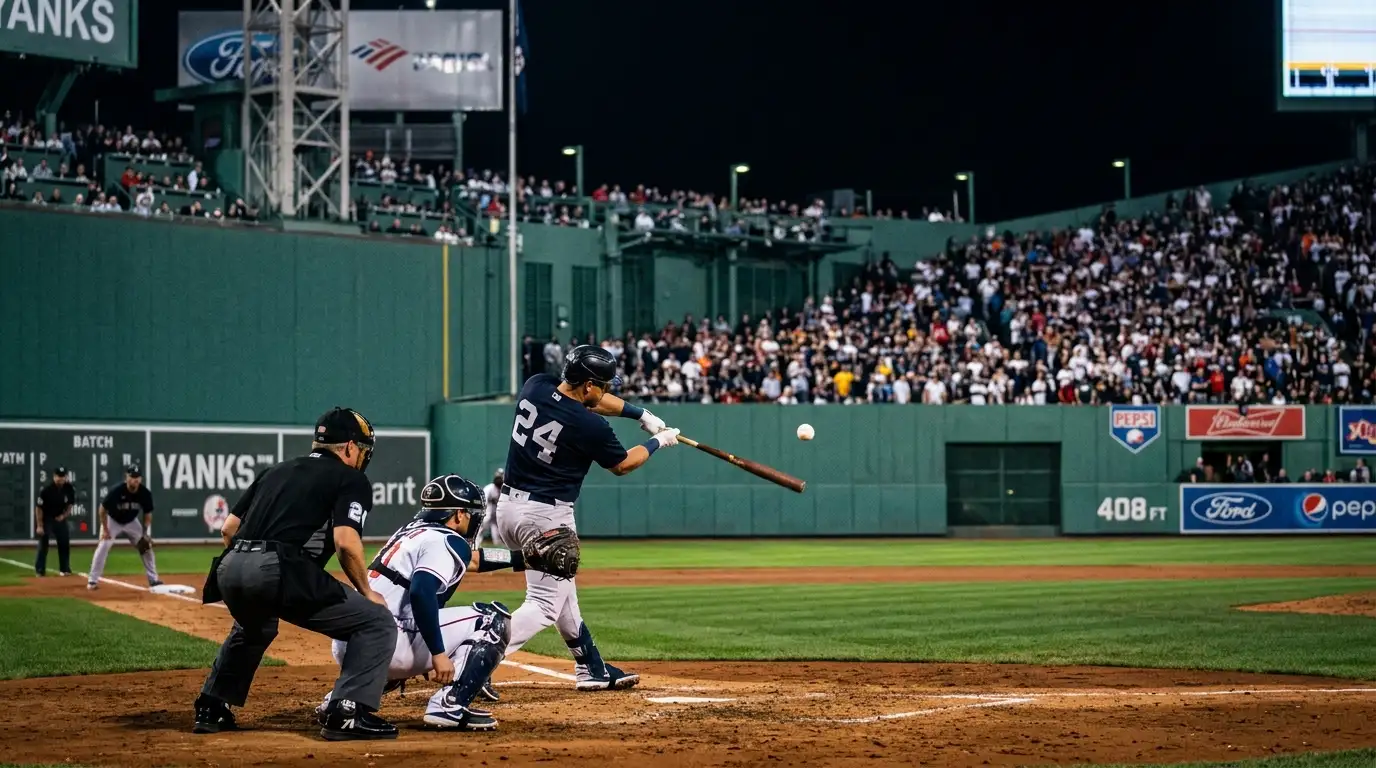
A baseball becomes a home run when it leaves the bat at sufficient velocity and angle to clear the outfield fence. The threshold is specific: exit velocity above 95 mph and launch angle between 25 and 35 degrees produces home runs at the highest rate. These two numbers — available on tracking sites after every batted ball — tell you whether a hitter is mechanically in a position to hit home runs, separate from whether he has actually hit any recently.
This distinction matters because small samples lie. A hitter who has gone five games without a home run might be generating an average exit velocity of 93 mph and a launch angle of 22 degrees — both below the home run threshold. His drought is earned. Another hitter on the same five-game homer drought might show 97 mph exit velocity and 28-degree launch angle. He has been hitting the ball exactly hard enough and far enough to go out — the balls just found gloves. That second hitter’s prop price has lengthened because of his recent results, but his underlying batted ball quality says a home run is overdue. That is the gap I exploit.
Ballpark Factors That Double Your Odds
Not all MLB parks are created equal, and the differences for home run betting are enormous. Coors Field in Denver, sitting at 1,600 metres above sea level, increases home run probability by roughly 30% compared to the league average. A hitter with a 6% per-game home run probability at a neutral site becomes a 7.8% probability at Coors. On a +350 prop, that shift takes the bet from marginal to valuable.
The parks at the other extreme suppress home runs just as dramatically. Certain stadiums with deep centre-field walls and marine air layers reduce home run rates by 15-20%. The same hitter who was a strong over play in Denver becomes an under play in those environments. I maintain a simple park factor for home runs — a multiplier from 0.80 to 1.35 — and apply it to every projection. The factor changes each year as stadiums adjust dimensions or as weather patterns shift, but the relative ordering stays remarkably stable.
Weather amplifies the effect. Hot, humid air with an outbound wind can turn a neutral park into a launching pad for one evening. Cold, dense air with an inbound wind can suppress homers even at traditionally hitter-friendly venues. I check wind direction and temperature within an hour of first pitch and adjust my park factor accordingly. A 15 mph outbound wind at Wrigley Field adds half a home run to the expected total for the game. The role of ballpark and weather factors extends well beyond home run props, but this is the market where those variables have the most direct and measurable impact.
Pitcher-Hitter Matchups and the Platoon Advantage
A right-handed power hitter facing a left-handed pitcher with a flat fastball is not the same bet as that hitter facing a right-hander with a sharp slider. The matchup specifics drive home run probability in ways the season-long average cannot capture.
Left-handed hitters historically generate more home runs per at-bat against right-handed pitchers, and vice versa. The platoon advantage for home runs is larger than for other hit types because the angle of the bat through the hitting zone creates more lift against opposite-hand pitching. A left-handed batter with 25 home runs overall might have 18 of them against right-handed pitching — a split that dramatically changes his home run probability depending on who is on the mound tonight.
Pitch type matters too. Pitchers who rely on fastballs generate more home runs allowed than pitchers who lean on breaking balls and changeups. A fastball-heavy pitcher with an average velocity below 93 mph is especially vulnerable — his offerings arrive in the hitter’s zone at speeds that allow maximum bat speed and exit velocity. MLB set a record with 3,617 stolen bases in 2024, and that offensive aggression extends to approaches at the plate, where hitters increasingly gear up for fastballs and accept strikeouts as the trade-off for more powerful contact when they connect.
See also: betting for baseball for all player prop market guides.
Structuring Home Run Bets for Long-Term Profit
Home run props are inherently high-variance. Even the best power hitters go homer-less in 70-75% of their games. That means you will lose the majority of individual bets, and your profit comes from the price exceeding the true probability on the occasions when the bet wins.
The pricing typically looks like this: a premium slugger might be offered at +280 (roughly 3.80 decimal) to hit a home run tonight. If his true probability for this specific game — after adjusting for matchup, ballpark, weather and platoon — is 30%, you need odds of +233 (3.33 decimal) to break even. At +280, you have an expected value of roughly 14% per bet. That is a strong edge, but it will manifest as long losing streaks punctuated by clusters of winners. Bankroll management designed for prop betting differs from standard moneyline staking — the unit size should be smaller, typically 0.5% of bankroll, to absorb the higher loss frequency.
I track my home run prop results separately from all other bets. Over a full season, I aim for 800-1000 home run prop bets. The strike rate typically lands between 22% and 26%, with an average winning price of +300 to +350. At those numbers, a 24% strike rate at an average price of +320 produces a 1% edge per bet. Across 900 bets, that compounds into a meaningful return — not spectacular, but consistent and uncorrelated with my moneyline and totals results.
What odds do home run prop bets typically offer at UK sportsbooks?
Home run props for individual batters typically range from +200 (3/1) for elite power hitters in favourable matchups to +600 (6/1) or longer for contact-oriented batters. The standard offering is a Yes/No market on whether a named player will hit at least one home run during the game.
Do home run props count extra-inning home runs?
Yes. Home run prop bets cover the entire game including extra innings. If a named batter hits a home run in the tenth or eleventh inning, the bet settles as a winner. The prop only requires the batter to be in the starting lineup or enter the game as a substitute.
Created by the ”Betting for Baseball” editorial team.