Baseball Over/Under Betting: How to Analyse MLB Totals for UK Sportsbooks
 Available in US

Betting on Runs, Not Winners — How Totals Work in Baseball
Some of my most profitable baseball bets have come from games where I had no opinion on who would win. I just knew the total was wrong. That is the beauty of over/under betting — you step outside the binary win/lose framework and focus on a variable that the market frequently misprices: how many runs will be scored.
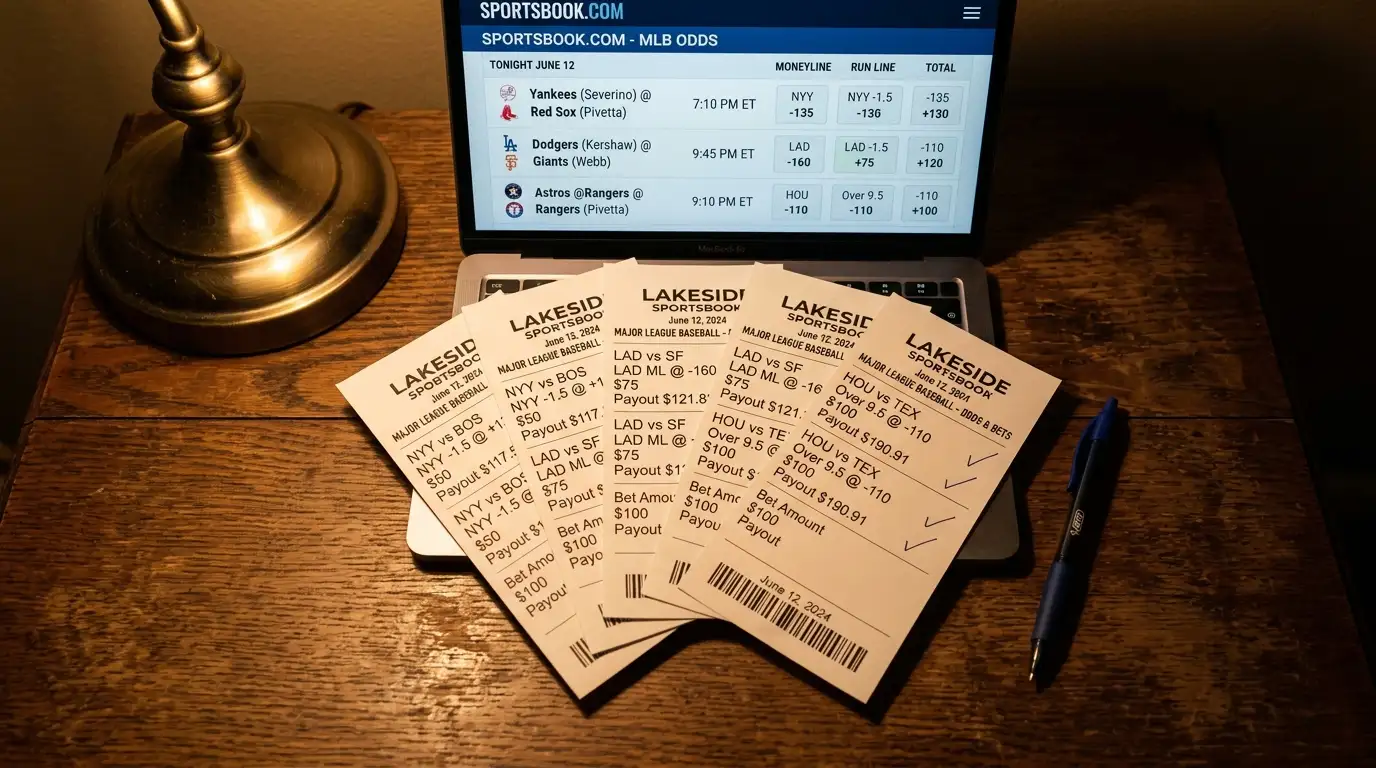
The total, or over/under, is a single number set by the bookmaker representing the expected combined score of both teams. If the line is 8.5, you bet Over if you think nine or more runs will score, or Under if you expect eight or fewer. The half-run eliminates ties and forces a definitive outcome. MLB games in 2024 averaged around 8.5 combined runs, so the most common total line you will see at UK sportsbooks hovers between 7.5 and 9.5, with outliers in either direction depending on the matchup.
Average game duration in MLB fell to 2 hours 36 minutes in 2024, the shortest figure in 40 years. The pitch clock has changed offensive rhythms, and bookmakers have adjusted totals downward in response. If you are still calibrating your sense of “normal” scoring from pre-2023 seasons, recalibrate — the run environment has shifted, and the lines reflect that shift.
See also: weather directly affects run totals — read our ballpark weather factor guide.
How Bookmakers Set the Total Line
I spent an afternoon talking to a former odds compiler at a mid-tier UK sportsbook. His description of the totals-setting process was more mechanical than most bettors imagine. The line starts with the league’s overall runs-per-game average, then adjusts for four primary inputs: starting pitcher quality, offensive matchup data, ballpark run factor, and weather.
The starting pitcher adjustment is the largest single variable. An ace with a sub-3.00 ERA facing a mediocre lineup might drop the projected total by 1.5 runs compared to the baseline. A back-end starter with a 5.00+ ERA facing a top-five offence might push it up by a similar margin. The pitcher adjustment alone accounts for roughly 60% of the variance between the lowest and highest totals on any given day’s slate.
Offensive matchup data includes the batting team’s performance against left-handed or right-handed pitching, recent form over the past 10-15 games, and platoon splits. Bookmakers weight recent form more heavily than season-long averages during the summer months because injuries, fatigue and roster changes accumulate as the 162-game season grinds on.
Ballpark factors and weather conditions comprise the remaining adjustment, and I cover those in detail below. The point worth internalising here is that bookmakers are not guessing. They build total lines from component inputs, and each input creates a potential error margin. Your job as a bettor is to identify which component the bookmaker has mis-weighted in a specific game — not to out-model the entire process, but to find one crack in the wall. The average hold percentage in US sports betting — 10.15% in 2025 — gives you some indication of how much edge the operator builds into their lines. Totals markets tend to be slightly softer than moneylines because the betting public focuses more attention on sides than totals.
Pitcher ERA, Ballpark Dimensions and Weather as Totals Drivers
Three variables sit at the heart of every totals analysis I run, and each one deserves its own consideration because they interact in ways that are easy to overlook.
Pitcher ERA tells you how many earned runs a starter allows per nine innings. A 3.00 ERA means three runs over a full game on average. But ERA is a blunt instrument — it includes balls that happened to find fielders and excludes runners who scored on errors. FIP, fielding-independent pitching, strips out those factors and often diverges from ERA by half a run or more. When a pitcher’s ERA is 3.00 but their FIP is 4.20, regression is coming, and the totals market may not have caught up yet.
Ballpark dimensions create structural scoring environments. Some venues feature short outfield fences and carry-friendly altitudes that inflate run totals across hundreds of games. Others have deep outfield walls and sea-level air that suppress home runs. These effects are not marginal — the highest-scoring parks produce roughly 15-20% more runs per game than the lowest-scoring ones. Bookmakers account for park factors, but they use seasonal averages, while day-to-day conditions within a single park can vary substantially. A deep dive into ballpark and weather factors is essential if totals betting becomes a core part of your strategy.
MLB set a record 3,617 stolen bases in 2024, and that base-running explosion has a secondary effect on totals. More stolen bases mean more runners in scoring position, which means more runs per game even without additional hits. Totals markets have been slow to fully price in the new running game because the rule changes that enabled it are still recent enough that historical models underweight the effect.
Weather — specifically wind direction, temperature and humidity — adds the final variable. A 15 mph wind blowing out to centre field at a hitter-friendly park can add a full run to the expected total. The same wind blowing in can suppress scoring by a comparable margin. Temperature matters because baseballs travel further in warm air; games played above 30 degrees Celsius produce more home runs than games in the low teens. These are not subtle effects. They are measurable, consistent and underpriced in the market because most recreational bettors never check the weather forecast before placing a totals bet.
See also: betting for baseball for totals and run-scoring analysis.
Team Totals and Alternate Over/Under Lines
Beyond the combined game total, most UK sportsbooks now offer team totals — the over/under on a single team’s run production. If the game total is 8.5, the favourite’s team total might be set at 4.5 and the underdog’s at 3.5. Team totals let you isolate one side of the matchup, which is valuable when you have a strong read on one team’s offence but no conviction about the other.
I use team totals most frequently in mismatched starting pitcher situations. If one team sends an ace to the mound while the other starts a journeyman, the opposing team total becomes the target. The ace will likely suppress the opponent, making the Under on that team’s total a sharper play than the full-game Under, which also requires the journeyman to limit runs.
Alternate totals work like alternate run lines — you choose a different number than the standard line, and the odds adjust. If the line is 8.5, you can bet Over 9.5 at longer odds or Over 7.5 at shorter odds. Alternate totals are useful for expressing confidence levels. If you believe the game will be high-scoring but are not certain it will clear 8.5, betting Over 7.5 at reduced odds gives you a buffer. If you are highly confident in a blowout, Over 10.5 pays at prices that make the position worthwhile even at a lower hit rate.
One pattern I have tracked over multiple seasons: when the standard total is set at 9 or above and both starting pitchers have ERAs above 4.50, the Over hits at an elevated rate compared to the market’s implied probability. The public tends to bet Unders in these spots because the high line feels “too many runs,” but weak pitching matchups frequently exceed even inflated totals. This is exactly the kind of specific, data-driven angle that separates totals analysis from guesswork.
What is the most common total line in MLB?
Most MLB games carry a total between 7.5 and 9.5, with 8.5 being the single most frequent line across a full season. The exact number shifts based on the starting pitcher matchup, ballpark and weather conditions for each game.
Do rain-shortened games affect over under bets?
Settlement rules vary by sportsbook. Most UK operators void totals bets if the game does not complete the required number of innings for an official result. Always check your operator’s house rules for baseball-specific settlement terms before placing a bet.
Written by the editors at Betting for Baseball.