MLB Alternate Run Lines: Buying and Selling Runs for Bigger Payouts
 Available in US
Why the Standard 1.5-Run Spread Is Only the Starting Point
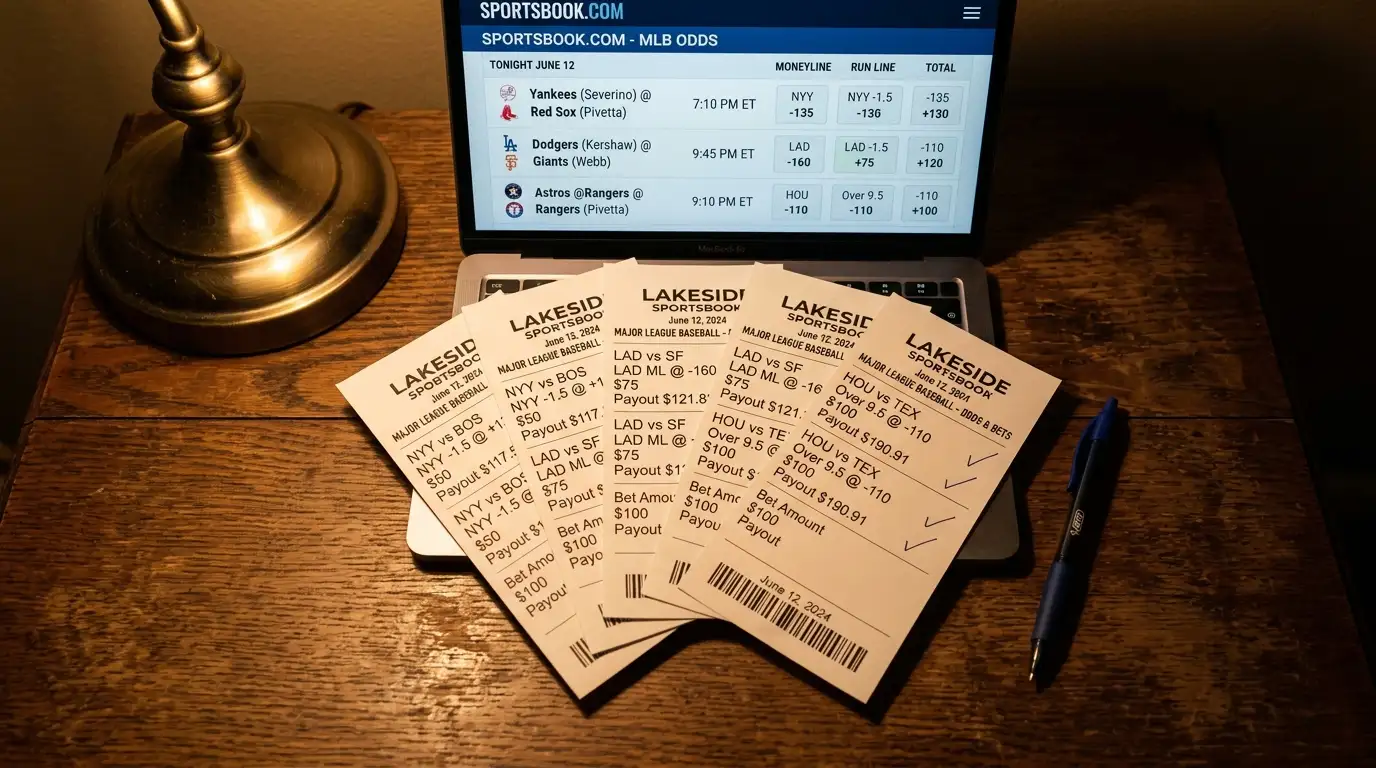
I placed my first alternate run line bet in 2019 — a -2.5 on a team sending their ace against one of the weakest lineups in baseball. The odds were roughly 9/5, the starter threw seven scoreless innings, and the team won 6-1. That single bet paid more than two standard moneyline winners at the prices available that night. It also taught me that the fixed 1.5-run spread, while useful, is a blunt instrument in a sport where margin of victory varies wildly from game to game.
The standard run line sets every MLB favourite at -1.5 and every underdog at +1.5. Alternate run lines let you adjust that number — typically to +/-2.5, +/-3.5 or even +/-4.5 at some UK sportsbooks. Moving the line changes the odds dramatically, and that flexibility opens up plays the standard market cannot accommodate. Around 28% of MLB games are decided by exactly one run, which means the gap between a 1.5 and a 2.5 spread captures a meaningful slice of outcomes.
Think of it this way: the standard run line is a fixed-size shoe. It fits some matchups perfectly and others poorly. Alternate run lines let you choose the size. A dominant pitching matchup calls for a tighter spread on the favourite side. A volatile slugfest calls for wider protection on the underdog. The market gives you the tools — the question is whether you know which size to pick.
See also: understand standard spreads first in our run line betting guide.
How Alternate Spreads Change the Maths
Last summer I ran a spreadsheet across 800 MLB games to see how win margins distributed. The results reshaped how I think about every spread bet I place. Roughly 28% of games ended with a one-run margin. Another 18% finished at exactly two runs. The drop-off from two to three runs was steep — about 14% — and margins of four or more accounted for the remaining 40% combined. Those numbers tell you exactly where the pricing tension lives in alternate run lines.
When you move from -1.5 to -2.5, you are excluding that 18% of two-run victories from your winning outcomes. The odds compensate — a favourite at 5/6 on the standard -1.5 line might price at 7/4 or 2/1 on -2.5. That compensation is generous on paper, but only profitable if you can identify matchups where blowouts are structurally likely rather than merely hopeful. The average sports betting hold in the US hit 10.15% in 2025, and alternate lines carry wider margins than standard markets because fewer sharp bettors trade them. Your analysis needs to overcome not just variance but a slightly thicker house edge.
On the underdog side, moving from +1.5 to +2.5 adds that same 18% slice back to your coverage. An underdog at 4/6 on the +1.5 line might tighten to 2/5 or 1/3 on +2.5. You are paying for insurance, and the cost is reflected in the compressed odds. The question becomes whether the premium is worth the protection — and in matchups where the underdog has a competitive starting pitcher but a thin bullpen, that extra run of cushion can turn a likely loss into a covered position.
Matchups That Favour Wider Spreads
A mate of mine who bets baseball professionally told me his single best filter for -2.5 plays: start with the pitcher, end with the bullpen. If the favourite’s starter has a FIP below 3.20 and the bullpen’s seventh-through-ninth-inning ERA sits in the bottom quartile of the league, the team holds late leads at an elevated rate. That combination — dominant starter plus lockdown bullpen — is the structural foundation for run lines wider than 1.5.
The opposing lineup matters equally. A team ranking in the bottom five for OPS against the relevant handedness (left or right, depending on the starter they face) is less likely to mount late comebacks. When you pair a strong pitching matchup with a weak opposing offence, the probability of a multi-run victory jumps considerably. MLB generated record revenue of $12.1 billion in 2024, and the analytical infrastructure that revenue supports means these matchup splits are available to anyone willing to look them up before placing a bet.
Conversely, +2.5 underdog plays work best when the underdog sends a competent starter (FIP between 3.50 and 4.20) against a favourite whose offence is streaky rather than consistently dominant. Streaky offences produce blowouts and shutouts in unpredictable patterns, which makes the standard -1.5 volatile for the favourite and the +2.5 safe harbour for the underdog. I target these spots particularly in interleague games, where unfamiliarity with pitching staffs amplifies offensive inconsistency.
One pattern worth flagging: day games after night games. Teams playing a day game following a late night finish tend to underperform offensively, especially in the middle innings when fatigue compounds. If the favourite is in that scheduling spot, their -2.5 line becomes riskier than the raw matchup suggests. If the underdog is in that spot, the +2.5 line is less protective than it appears, because the underdog’s own offence may struggle to stay close. Schedule and travel angles interact with alternate run lines more than most bettors realise.
Middling: The Advanced Play Between Two Spreads
The first time I successfully middled a baseball game, it felt like finding money in a coat pocket. I backed the favourite at -1.5 with one sportsbook and the underdog at +2.5 with another. The favourite won by exactly two runs. Both bets cashed. The probability of that exact outcome was roughly 18%, but the combined payout exceeded what either bet would have returned individually.
Middling works because the standard run line and alternate run lines create a gap — a window of outcomes where both sides win. At -1.5 favourite and +2.5 underdog, the middle is a two-run favourite victory. At -1.5 and +3.5, the middle widens to two-run and three-run margins. The wider you spread the positions, the higher the probability that the middle hits, but the cost of placing two bets eats into profitability.
The maths requires both bets to offer odds that, combined, produce a positive expected return on the middle outcome while limiting losses when only one side cashes. If you back the favourite at -1.5 at 5/6 and the underdog at +2.5 at 2/5, your outlay on the middle is both stakes. When the middle hits, you collect on both; when it misses, you collect on one and lose the other. The net gain on a successful middle must exceed the cumulative losses across misses for the strategy to work over time.
This is not a casual play. It requires accounts at multiple sportsbooks, real-time price comparison and quick execution before lines move. But for bettors already using several UK platforms, the infrastructure cost is minimal. The edge comes from the structural rigidity of baseball’s fixed spread increments — unlike football, where handicap lines move in quarter-goal steps, baseball jumps in full runs, leaving wider gaps to exploit.
See also: betting for baseball for a complete guide to MLB wagering.
Sizing Your Stakes on High-Variance Lines
I learned the hard way that alternate run lines demand smaller stakes than standard bets. Early on, I sized my -2.5 bets identically to my moneyline positions, reasoning that the higher odds compensated for the lower hit rate. They do, in theory. In practice, a string of six consecutive -2.5 losses — entirely possible at a 40% hit rate — created a drawdown that took weeks to recover from. The variance on wider spreads is real, and your bankroll management must account for it.
My current approach: standard run line bets get a full unit. Alternate -2.5 bets get half a unit. Anything wider than -2.5 gets a quarter unit. On the underdog side, +2.5 bets can carry a full unit because the hit rate is higher, but the compressed odds mean the profit per bet is smaller. This scaling keeps the expected loss during cold streaks within tolerable bounds while preserving meaningful upside when the selections land.
The 162-game MLB season — the longest in professional team sports — is both a blessing and a curse for alternate run line bettors. The volume of games means you will find suitable matchups almost daily, which smooths variance over time. But it also tempts overexposure. Betting three or four -2.5 lines on a single night’s slate multiplies your risk in a way that a single -2.5 position does not. Discipline means passing on marginal spots even when the schedule offers a full board of games.
What is the difference between a standard run line and an alternate run line?
The standard run line is fixed at 1.5 runs for every MLB game. Alternate run lines let you adjust that spread to 2.5, 3.5 or wider. Favourites at wider spreads pay better odds but must win by a larger margin. Underdogs at wider spreads can lose by more runs and still cover.
Are alternate run lines available at UK sportsbooks?
Most major UKGC-licensed sportsbooks offer alternate run lines for MLB games, typically at +/-2.5 and sometimes +/-3.5 or wider. Availability varies by operator and may be more limited for less popular matchups or early-season games.
Prepared by the Betting for Baseball editorial staff.