MLB Umpire Impact on Betting: How the Man Behind the Plate Affects Your Odds
 Available in US
The Variable Hiding in Plain Sight
I once watched two nearly identical pitching matchups on the same evening — similar ERAs, similar opposing lineups, similar ballpark factors. One game finished 2-1. The other finished 8-6. The biggest difference between them was the home plate umpire. The first game had an umpire with one of the largest strike zones in baseball. The second had one of the tightest. Same sport, same night, drastically different scoring environments — and the totals market had barely distinguished between them.
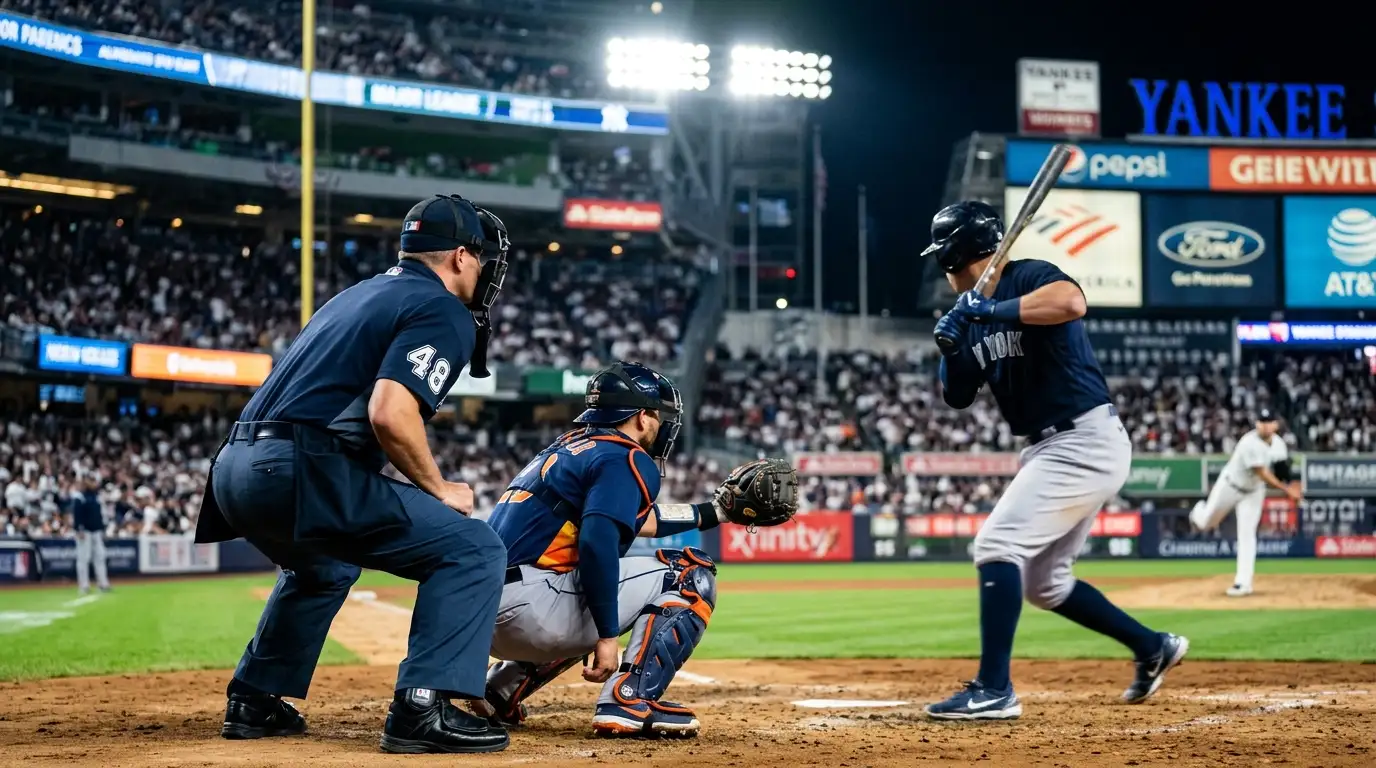
Every MLB game has a crew of four umpires, but the home plate umpire is the one who shapes the betting landscape. He calls balls and strikes, determines the effective size of the strike zone, and through those decisions influences strikeout rates, walk rates, pitch counts and ultimately run scoring. The electronic strike zone data available since 2015 has made these tendencies measurable, repeatable and — for bettors who pay attention — exploitable.
This is not a fringe angle. The difference between the most generous and most restrictive strike zones in MLB’s umpire pool amounts to roughly 1.5 runs per game in scoring differential. That gap is larger than the difference between many starting pitcher matchups, yet the totals market adjusts for pitchers far more aggressively than it adjusts for umpires. The mispricing exists because most recreational bettors never check the umpire assignment before placing a totals bet.
See also: learn the basics first in our how to bet on baseball starter guide.
Strike Zone Size and Its Cascading Effects
A mate who spent three years compiling umpire data showed me a chart that changed how I approach totals forever. He plotted each umpire’s average called strike zone area against the average total runs scored in their games over a full season. The correlation was stark — umpires with zones 10% larger than average saw roughly 0.8 fewer runs per game, while umpires with zones 10% smaller than average saw roughly 0.7 more runs. The effect is not subtle; it is systematic and persistent from season to season.
The mechanism is straightforward. A larger strike zone means more called strikes on pitches at the edges. More called strikes mean higher strikeout rates and lower walk rates for pitchers. Fewer walks mean fewer free baserunners. Fewer baserunners mean fewer runs. The cascade flows predictably from zone size to scoring, and each link in that chain is measurable.
The reverse holds for tight zones. When an umpire squeezes the strike zone, pitchers must throw more pitches in the heart of the plate to get strikes. Hitters see more hittable pitches. Walk rates rise. Pitch counts climb, pushing starters out of the game earlier and handing innings to less reliable middle relievers. Average game duration fell to 2 hours 36 minutes in 2024 — the shortest in four decades — but games with tight-zone umpires still run longer because of the increased pitch counts and plate appearances those zones generate.
One data point that surprised me: umpire zone consistency matters as much as zone size. An umpire with a large but consistent zone lets pitchers plan their approach and attack edges confidently. An umpire with an inconsistent zone — one that shifts between half-innings or drifts as the game progresses — creates uncertainty that hurts both pitchers and hitters. Inconsistent zones tend to produce higher-scoring games because pitchers cannot trust their borderline pitches and eventually groove fastballs to avoid falling behind in counts.
Umpire Tendencies and the Totals Market
Every morning during the MLB season, I check two things before looking at any odds: the starting pitcher matchup and the home plate umpire assignment. The pitcher tells me the baseline for the game. The umpire tells me whether to adjust that baseline up or down. Combining both inputs gives me a totals projection that is consistently sharper than the market line.
Umpire assignments are typically published 24 to 48 hours before first pitch. UK sportsbooks post their totals lines well before that, often as soon as the starting pitchers are confirmed. That timing gap creates a window: the line is set without the umpire variable, and the market rarely adjusts once the assignment is known. If you are checking umpire data after the assignment drops and the line has not moved, you are seeing genuine mispricing.
The practical application is binary. If the assigned umpire has a career over/under record that skews heavily to one side — say, 56% or more of their games going Over across three or more seasons — and the game total sits at or below league average, the Over has structural value. If the umpire’s games consistently go Under at a similar rate and the total sits at or above average, the Under is the play. The average hold percentage in US sports betting reached 10.15% in 2025, and totals markets carry a slightly thinner edge for the house than moneylines. Umpire-based angles narrow that edge further because the market systematically underweights the variable.
I track roughly 30 regular home plate umpires across MLB. About a third of them show strong, persistent Over tendencies. Another third lean Under. The remaining third are neutral — their games track close to league-average scoring. The neutral group offers no edge, but the outliers on either side produce actionable data across hundreds of games per season.
Umpires and Pitcher Performance Interaction
The umpire’s impact does not exist in isolation — it interacts with pitcher style in ways that multiply or neutralise the effect. Understanding that interaction is where the real edge lives, beyond simply checking a career over/under split.
Pitchers who live on the edges of the strike zone — typically finesse arms with high breaking-ball usage — benefit disproportionately from generous umpires. A pitcher whose game plan revolves around painting corners gets more called strikes and more quick outs with a large zone. Pair that pitcher with a generous umpire, and his performance exceeds his season averages. Pair him with a tight-zone umpire, and those corner pitches become balls, inflating his walk rate and pitch count.
Power pitchers who throw through the zone — high fastball velocity, heavy strikeout rates on swinging strikes — are less affected by umpire tendencies. Their strikeouts come from overpowering hitters, not from borderline calls. A tight zone costs a power pitcher fewer strikes because his pitches beat the bat regardless of where the umpire draws the line. This means the umpire adjustment should be larger for finesse pitchers and smaller for power arms.
MLB recorded a record 3,617 stolen bases in 2024, and umpire tendencies affect this too. Umpires with large zones allow pitchers to work faster and pay more attention to baserunners because they spend fewer pitches getting into favourable counts. Umpires with tight zones force pitchers into longer at-bats, dividing their attention between the batter and the runner. Stolen base attempts increase against pitchers who are struggling with the umpire’s zone — a secondary effect that compounds the scoring impact in totals markets.
See also: betting for baseball for all advanced MLB betting angles.
Where the Automated Strike Zone Changes Everything
The elephant in the room is technology. MLB has tested the automated ball-strike system — commonly called robot umpires — in the minor leagues for several seasons, and full implementation at the major league level feels inevitable. When it arrives, the umpire variable I have described will disappear overnight. Every game will have the same objective zone, and the systematic mispricing based on umpire tendencies will evaporate.
Until that day, the edge remains. The betting market has not priced in the transition because the timeline is uncertain, and umpire-based tendencies continue to produce measurable results in every game that uses human ball-strike calls. If anything, the approach is becoming more profitable as the data grows richer — each additional season of electronic zone tracking refines the umpire profiles and tightens the confidence intervals around their tendencies.
My advice: build your umpire database now, exploit it while it exists, and be ready to reallocate that analytical effort when the automated zone arrives. The bettors who understand umpire impact today will transition smoothly to whatever new variable replaces it, because the underlying skill — identifying market-ignored factors that affect scoring — transfers to any sport and any market. Pairing umpire analysis with disciplined bankroll management turns a niche angle into a sustainable long-term edge.
Where can I find MLB umpire assignments before a game?
Umpire assignments are typically published 24 to 48 hours before first pitch on MLB’s official communications and several free baseball data sites. Check after the starting pitchers are confirmed to combine both variables in your totals analysis.
Will robot umpires eliminate umpire-based betting angles?
When MLB fully implements the automated ball-strike system, individual umpire zone tendencies will no longer affect scoring. Until then, the human element remains a measurable and exploitable variable in totals markets.
Created by the ”Betting for Baseball” editorial team.