MLB Live In-Play Betting: How to Bet on Baseball Games Already in Progress
 Available in US
Watching the Bullpen Door Is Worth More Than Watching the Scoreboard
The single best in-play bet I ever placed came in the sixth inning of a game I was not even planning to bet on. The home team’s starter was dealing — seven strikeouts, no walks, cruising through the lineup. Then I saw him grab his shoulder after a pitch. The broadcast barely mentioned it. Thirty seconds later, the bullpen phone rang, and within two minutes I had the opposing team’s moneyline at a price that reflected the starter still being in the game. He was not. That gap between what was happening on the pitch and what the market had priced lasted exactly three minutes.
In-play betting on MLB is a game of information speed. The market reacts to obvious events — home runs, pitching changes, errors — almost instantly. The edge lives in the events the market processes slowly: subtle changes in a pitcher’s mechanics, a manager’s body language during a mound visit, the specific reliever warming up in the bullpen. MLB’s average game now runs 2 hours 36 minutes after the pitch clock changes, which means the pace of in-play decisions is faster than it was even two years ago. Each half-inning moves quickly, and the market reprices between innings rather than continuously.
See also: track sharp money movement in our MLB line movement explainer.
The Structural Advantage of Betting Between Innings
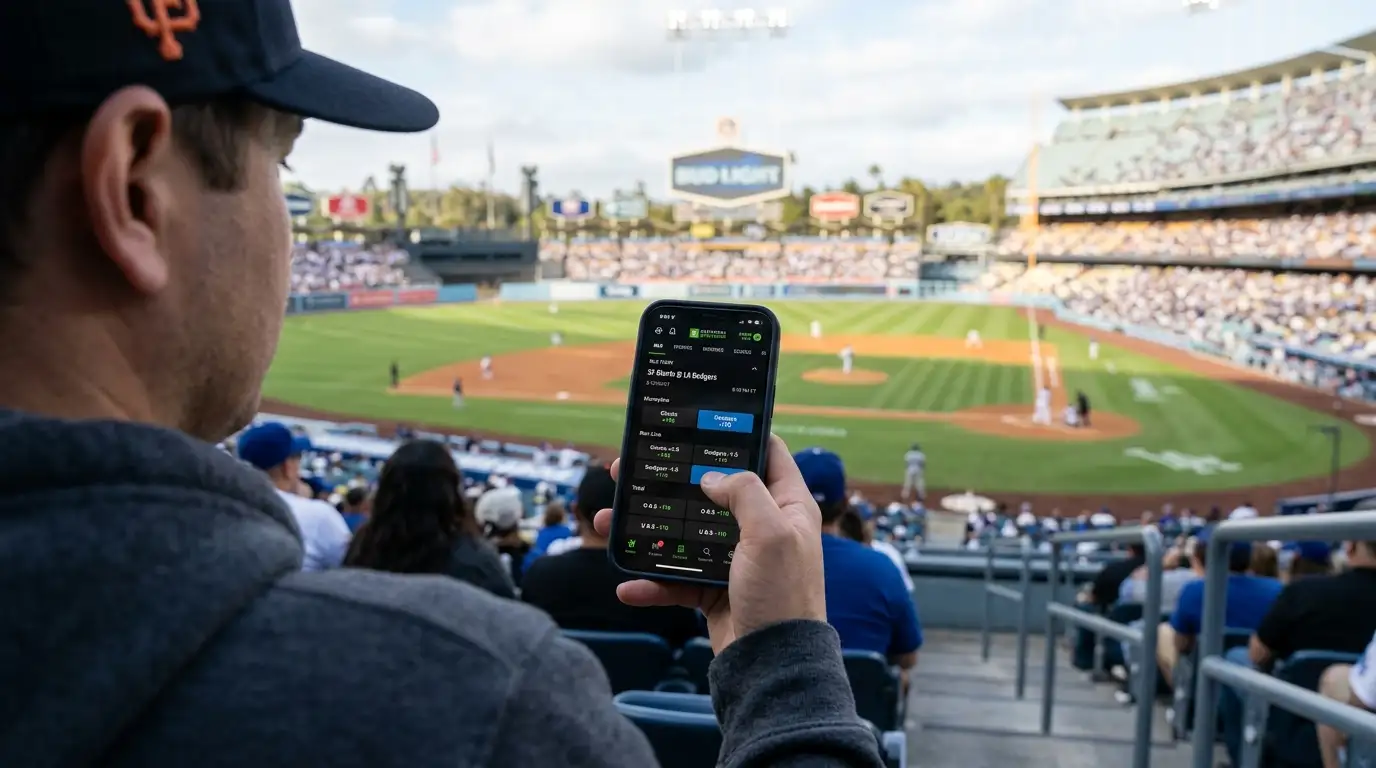
Most in-play baseball markets suspend during live action and reopen between half-innings. That pause — typically 90 seconds to two minutes — is when the sportsbook recalculates odds based on the current score, pitch count, bullpen state and game situation. For UK bettors watching on a stream with minimal delay, this between-innings window is the primary betting opportunity.
The key is understanding what the algorithm prices well and what it prices poorly. Current score and innings remaining? Priced accurately. Starting pitcher’s remaining workload based on pitch count? Reasonably accurate. Quality of the specific reliever likely to enter? This is where the model struggles. Sportsbook algorithms assign a generic “bullpen quality” factor rather than modelling the actual arms available. A team with its best three relievers rested is a different proposition than the same team with those three arms already used in the previous two games, and the in-play line often does not distinguish between those situations.
I keep a simple spreadsheet tracking each team’s bullpen usage over the preceding three days. When a team’s high-leverage relievers have thrown 25 or more pitches in the past 48 hours, their availability drops sharply. If that team is protecting a one-run lead in the sixth inning, the market is pricing bullpen quality that does not exist for that specific game. The opposing team’s live moneyline becomes an overlay.
When the Score Lies and When It Tells the Truth
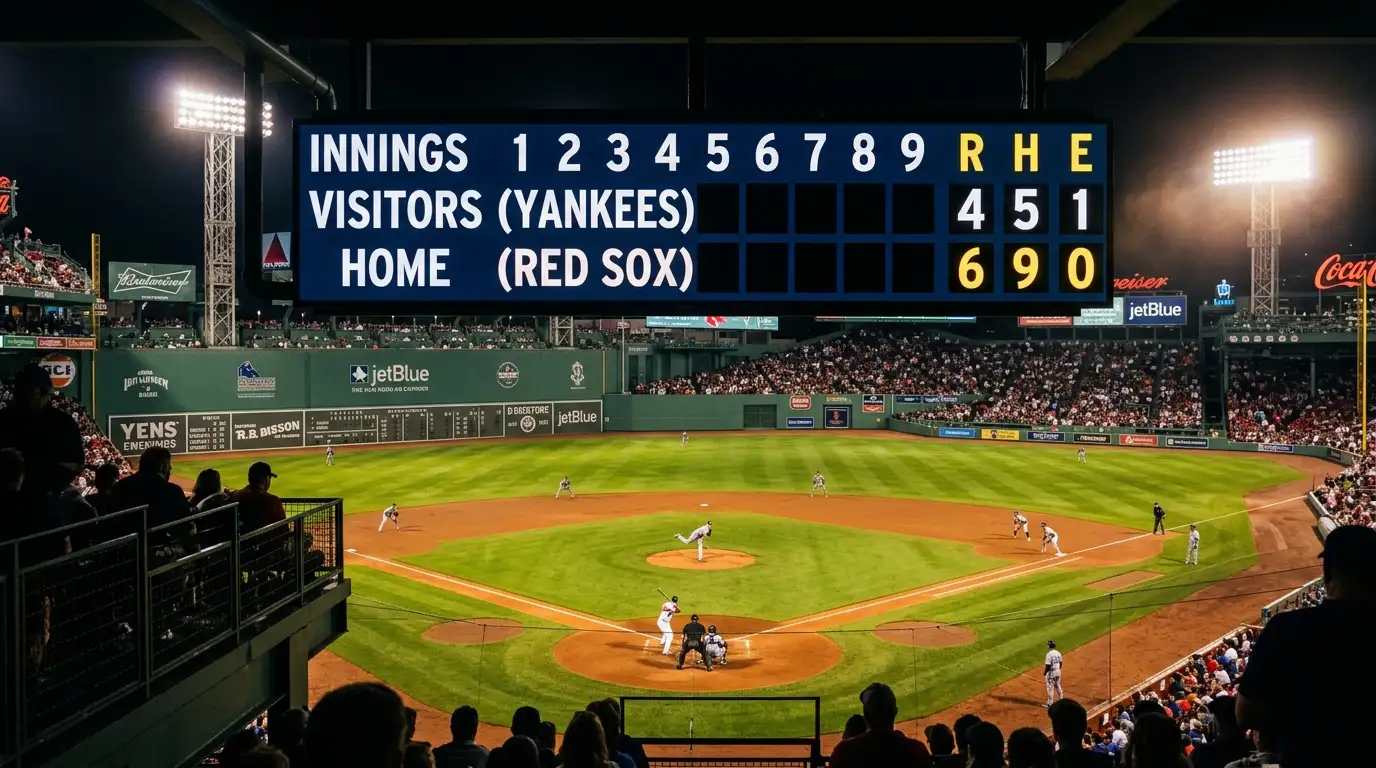
A 3-0 lead after three innings feels commanding. Is it? In baseball, roughly 28% of all games are decided by exactly one run, which tells you that leads evaporate regularly. A three-run advantage through three innings translates to the leading team winning approximately 82% of the time. That is a strong position, but it means the trailing team still wins nearly one in five. If the in-play moneyline on the trailing team is 5/1 or longer, you are getting value — the true probability is closer to 4/1.
The score matters less than the context producing it. Three runs scored on a bases-loaded walk, two errors and a bloop single do not indicate offensive dominance — they indicate noise. Three runs scored on two line-drive doubles and a home run indicate a lineup locked in against the pitcher’s stuff. The first scenario is likely to regress; the second is likely to continue. In-play markets treat both identically because they read the scoreboard, not the quality of contact.
Advanced metrics available during games — exit velocity, launch angle, expected batting average on batted balls — give you a real-time read on which team is actually hitting well versus which team is benefiting from luck. A team trailing 1-0 but generating an average exit velocity of 95 mph is more dangerous than the score suggests. A team leading 3-0 on soft contact and defensive mistakes is more vulnerable. These numbers are available on free tracking sites within seconds of each batted ball, and they update faster than the in-play market adjusts.
Pitching Changes as Inflection Points
Every pitching change is a market reset. The starter leaves, a reliever enters, and the probability of every subsequent outcome shifts. This is the moment where in-play bettors make or lose their money.
Not all pitching changes are equal. A manager pulling his starter after 95 pitches with the lead is a planned, strength-to-strength transition. The bullpen arm entering is likely the team’s best available option for that situation. This change barely moves the true probability and should barely move the line — but it does, because some bettors reflexively back the team facing the new pitcher, assuming any change is destabilising.
An unplanned removal — the starter pulled mid-inning after giving up consecutive hits — is a genuine inflection point. The reliever entering is often not the team’s best option but rather the arm that happened to be warm. If the bases are loaded and the long reliever enters instead of the closer, the trailing team’s probability of scoring has increased more than the market typically reflects. I have found that unplanned mid-inning pitching changes with runners on base produce the widest gap between true probability and market price in all of baseball in-play betting. Flutter Entertainment’s $15.91 billion in 2025 revenue shows just how enormous the live betting market has become globally, and baseball’s share of that in-play handle grows each season.
See also: betting for baseball for live and pre-game market guides.
Practical Timing for UK-Based In-Play Bettors
MLB games start between 5pm and 3am UK time, with the bulk of the slate falling between 11pm and 1am. That timing creates a self-selecting filter — the UK bettors who are active during those hours tend to be more dedicated and more knowledgeable than the casual punter placing a pre-match accumulator. The in-play markets for MLB at UK sportsbooks are thinner than for Premier League or tennis, which means prices can be less efficient but also that your bets may move the line more quickly.
Stream delay is the critical variable. UK-available streams of MLB games run 15 to 45 seconds behind real time, depending on the platform. If you are betting in-play based on what you see on a delayed stream, you are betting on information the market has already processed. The workaround is to use a real-time pitch-by-pitch text tracker alongside your stream. These trackers update within two to three seconds of each pitch, well ahead of most video streams. When the tracker shows a pitching change or a significant event, you can assess the situation and prepare your bet before the between-innings market opens.
The late starts also mean fatigue management is part of your edge. If you are sharp at 11pm but foggy at 2am, limit your in-play activity to the early slate rather than forcing bets on West Coast games. A solid approach to run line betting provides additional in-play angles beyond simple moneylines, especially when a game’s margin aligns with run line thresholds. The best in-play bet is no bet at all if you are not clear-headed enough to process the information advantage you have built.
Is live betting on MLB available at UK sportsbooks?
Yes. Most UKGC-licensed sportsbooks offer in-play markets on MLB games, including live moneylines, run lines and totals. Market availability and depth vary by operator, with more options typically available for nationally televised games and playoff contests.
How do I deal with stream delay when betting MLB in-play?
Use a real-time pitch-by-pitch text tracker alongside your video stream. Text trackers update within seconds of each pitch, well ahead of most video streams. Prepare your bets based on the tracker and place them during the between-innings window when markets reopen.
Written by the editors at Betting for Baseball.