How to Bet on Baseball: A Step-by-Step Beginner’s Guide for UK Punters
 Available in US
Table of Contents
- From First Pitch to First Bet — What You Need to Start
- Baseball Rules That Matter for Betting
- Placing Your First Baseball Bet: A Walk-Through
- Understanding Odds on Your Betting Slip
- Moneyline vs Run Line: Which Should a Beginner Choose?
- Reading a Baseball Betting Card: Pitchers, Lines and Timing
- Five Mistakes New Baseball Bettors Make
- Your First Season at the Betting Window

From First Pitch to First Bet — What You Need to Start
I still remember the afternoon a mate handed me a betting slip with “NYY ML” scrawled across it and I had absolutely no idea what I was looking at. I’d spent years backing football accumulators on Saturday afternoons, yet a simple baseball moneyline felt like a foreign language. That was a decade ago. Today I model MLB odds for a living, and I can tell you with confidence: if you already bet on Premier League matches, you’re closer to understanding baseball markets than you think.
Baseball betting is one of the fastest-growing niches inside UK sportsbooks, and the numbers back that up. Around 10% of the UK adult population now places sports bets online, feeding a market that generated a combined Gross Gambling Yield of £7.8 billion between April 2024 and March 2025 — a 13.1% jump year on year. MLB, with its record $12.1 billion in league revenue during 2024, sits at the centre of that growth. British bookmakers have responded by widening their baseball coverage, adding pre-match and in-play markets that would have been unthinkable five years ago.
This guide exists because every other “how to bet on baseball” page I’ve seen either drowns you in jargon or barely scratches the surface. I’m going to walk you through the sport the way I wish someone had walked me through it: one concept at a time, each illustrated with a real-world example in pounds and fractional odds, pitched at someone who’s never watched nine innings but knows their way around a betting app. By the end you’ll have placed — or at least understood — your first baseball bet. Let’s start with the basics that actually matter.
See also: compare the best baseball betting sites in the UK to get started.
Baseball Rules That Matter for Betting
You don’t need to memorise the entire rulebook, but a handful of baseball mechanics directly affect every bet you place. Think of it like football: you don’t need to know the offside trap inside-out, but you’d better understand what a clean sheet means before you back one.
A standard MLB game runs nine innings. Each inning has a top half (away team bats) and a bottom half (home team bats). Three outs retire a side. If the score is level after nine, extra innings continue until someone leads at the end of a full inning — there’s no penalty shootout, no draw. That last point matters enormously for betting: every game produces a winner, which is why moneyline (straight-up win) markets are so central to baseball.
Pitching dominates the game in a way no single position does in football. The starting pitcher typically throws for five to seven innings before handing off to the bullpen — a team of relief pitchers who close out the rest. When you see a line move an hour before first pitch, nine times out of ten it’s because a starting pitcher has been scratched (pulled from the lineup). The average MLB game in 2024 lasted just 2 hours and 36 minutes, the shortest in four decades, thanks to the pitch clock introduced in 2023. That compressed timeline makes each at-bat count more, and it means live markets move faster than they used to.
Runs are scored by advancing around four bases and touching home plate. A home run clears the outfield fence and scores everyone on base in one swing. A “run” in baseball is the equivalent of a goal in football, except the average MLB game produces around eight or nine of them combined. That high-scoring nature is precisely why totals (over/under) markets are so popular — and so different from football’s typical 2.5-goal line.
One rule catches out every new bettor at least once: the mercy rule doesn’t exist in MLB. A team can be ten runs down in the eighth inning and still has to play until three outs. Blowouts happen, and they affect run-line and totals bets in ways you need to anticipate. I’ve seen a 10-1 lead evaporate into a 10-9 finish, and those late rallies are precisely the kind of variance that makes baseball betting both maddening and profitable if you understand it.
Placing Your First Baseball Bet: A Walk-Through
Let me take you through an actual bet from start to finish. Forget theory for a moment — open your sportsbook app (95% of online bets in the UK are placed from home, so chances are you’re on your sofa) and navigate to the baseball section. Most apps file it under “Baseball” or “MLB” depending on the season.
You’ll see a list of upcoming games displayed as matchups. Each game shows two teams, a time (adjusted to BST or GMT), and a set of odds. The first market you’ll encounter is the moneyline — simply which team wins. Suppose you see:
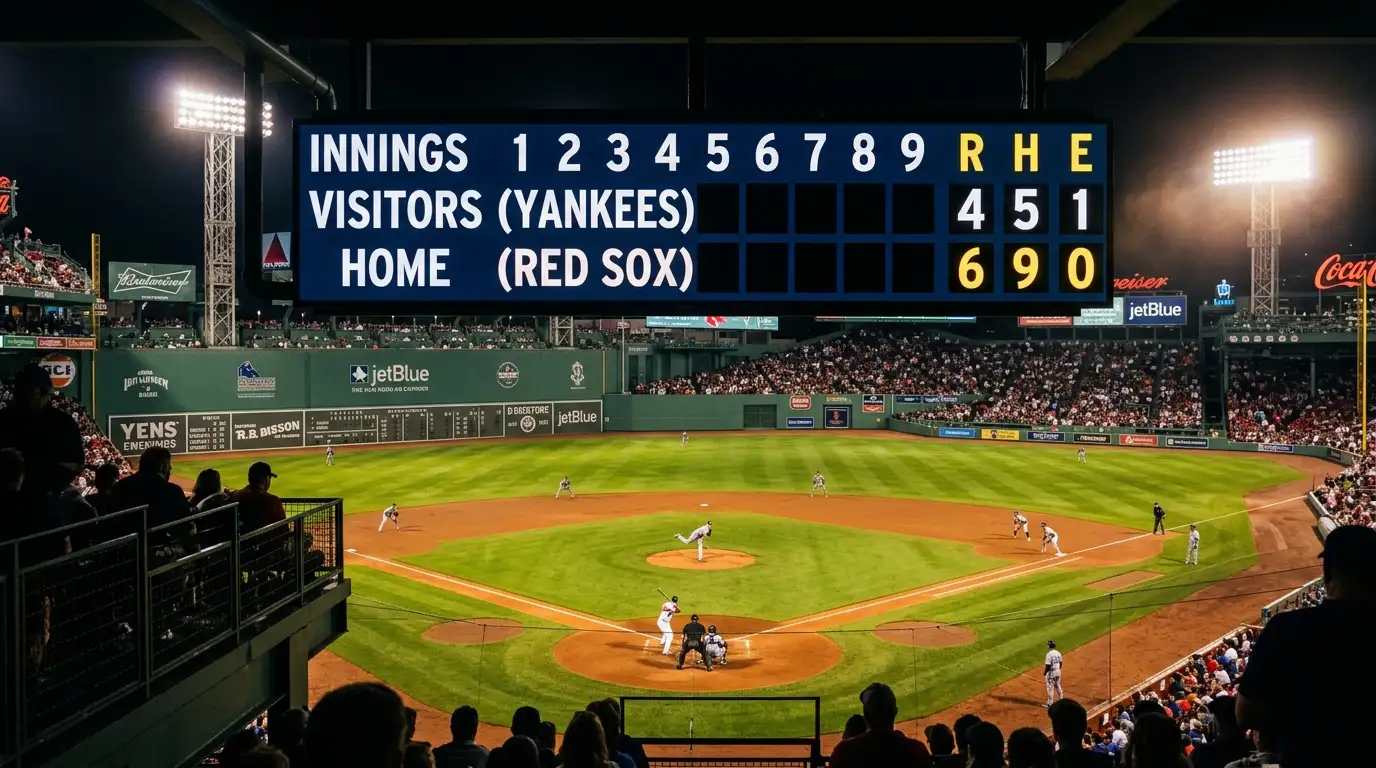
New York Yankees 4/6 vs Boston Red Sox 11/8
In fractional odds, 4/6 means the Yankees are favourites: stake £6 to profit £4 (plus your £6 stake back). The Red Sox at 11/8 are underdogs: stake £8 to profit £11. If you think the Yankees will win, tap their odds, enter your stake — say £10 — and the slip will show a potential return of £16.67 (£10 stake + £6.67 profit). Confirm, and you’ve placed your first baseball bet.
A few practical things to notice on that slip. First, the scheduled starting pitchers will usually appear next to each team’s name. This is critical information, not decoration. If the listed pitcher changes before game time, many sportsbooks give you the option to cancel the bet or confirm it at adjusted odds. Second, check whether your bookmaker offers “action” or “listed pitcher” rules by default. Under “action” rules, your bet stands regardless of pitching changes; under “listed pitcher” rules, it’s void if either starter is scratched. Most UK books default to action, but it’s worth checking your settings once.
Third, timing. MLB games on the US East Coast start around 11:00 PM or midnight BST. West Coast games tip off even later. If you’re a night owl, you can watch along; if not, place your pre-match bet and check the result over morning coffee. Weekend afternoon games (around 6:00 PM BST) are more sociable for UK-based punters, and those early Sunday doubleheaders sometimes start as early as 5:30 PM our time.
Understanding Odds on Your Betting Slip
Here’s something that trips up UK bettors more than it should: the same baseball game can show three completely different-looking numbers depending on which odds format your sportsbook is using. The price is identical — only the notation changes. I’ve watched people on forums argue about which site has “better odds” when they were comparing fractional to American formats and not realising the payout was the same.
Fractional odds are the UK default. You already know them from horse racing and football: 5/4 means you profit £5 for every £4 staked. Decimal odds, common on European-facing sites, express the total return per £1 staked: 2.25 means a £1 bet returns £2.25 (£1.25 profit). American odds — the format you’ll encounter on US-focused baseball analysis sites — use a plus/minus system: -150 means stake £150 to profit £100, while +130 means stake £100 to profit £130.
The conversion maths isn’t hard, but you don’t need to do it manually. Every major UK bookmaker lets you toggle between formats in your account settings. I keep mine on fractional for habitual UK bets and switch to decimal when I’m comparing margins across multiple sites, because decimal makes the implied probability visible at a glance. To find implied probability from decimal odds, divide 1 by the decimal figure: odds of 2.00 imply a 50% chance, odds of 1.50 imply 66.7%.
The average hold percentage in US sports betting sits at around 10.15%, which gives you a rough benchmark for the margin baked into the odds. UK books tend to operate with slightly tighter margins on headline markets, but baseball — being a lower-volume sport over here — sometimes carries wider margins than football. Comparing the same moneyline across three or four bookmakers before you click “place bet” is the simplest edge you’ll ever find, and it costs you nothing but thirty seconds.
Moneyline vs Run Line: Which Should a Beginner Choose?
About three months into my baseball betting journey, I backed a heavy favourite on the moneyline at 2/7. They won by six runs. My return? Barely noticeable. That’s when I discovered the run line, and it changed how I approach every game.
The moneyline is pure: pick the winner, collect your payout. No spread, no margin of victory — just who’s ahead when the final out is recorded. Because roughly 43-44% of MLB games are won by the underdog, the moneyline offers genuine value on both sides of a matchup, which is rare in sport. In the Premier League, a bottom-half club winning away at a top-four side might happen a handful of times per season. In baseball, the equivalent upset happens multiple times a week.
The run line applies a 1.5-run spread to the game. The favourite is listed at -1.5 (must win by two or more runs) and the underdog at +1.5 (can lose by one run and your bet still wins). About 28% of all MLB games finish with a margin of exactly one run — which means the run line converts a lot of moneyline winners into run-line losers and vice versa. That’s where the tension lies, and where informed bettors find value.
So which should a beginner choose? If you’re still getting comfortable with the sport, start with the moneyline. It’s clean, intuitive, and mirrors the “match result” market you already know from football. Back a couple of dozen moneyline bets across a few weeks, track your results, and get a feel for how favourite/underdog pricing works in baseball. Once you notice patterns — like how the best teams cover the -1.5 spread less than 56% of the time even in dominant seasons — you’ll be ready to layer in run-line selections. For a deeper dive into the mechanics of the spread, I’ve written a separate piece on run line betting in baseball that walks through alternate lines and extra-innings scenarios.
One more nuance worth banking early: the moneyline and run line are not independent bets in the way “match result” and “Asian handicap” sometimes feel in football. They’re linked by the same probability distribution. If you think a team will win comfortably, the run line at -1.5 gives you better odds for the same opinion. If you think the game will be tight, the underdog at +1.5 lets you back a team that might lose and still cash your slip. Rob Manfred, the MLB Commissioner, has talked about the sport being in a better position now to understand what’s happening in betting markets than in the days when everything was underground. That transparency benefits you as a bettor — the data is richer, the lines are tighter, and the edges sit in the margins.
Reading a Baseball Betting Card: Pitchers, Lines and Timing
Pull up any MLB game on your sportsbook right now and you’ll see more information packed into one screen than a typical Premier League match offers. That density is an advantage, not a barrier. Let me decode what you’re looking at.
At the top: the two teams and their scheduled starting pitchers. Those pitcher names are the single most important piece of pre-match data. In football, you might scan the teamsheet for a star striker or a backup goalkeeper. In baseball, the starting pitcher’s name alone can swing the line by 30 or 40 pence on a pound. A team’s ace versus the opponent’s weakest starter creates a lopsided matchup that the odds reflect heavily.
Below the matchup, you’ll see three core markets presented side by side: moneyline, run line (-1.5/+1.5), and the total (over/under a set number of runs). The total is typically anchored around 8.5 or 9.5, depending on the pitching matchup, the ballpark and weather conditions. Some sportsbooks also show “first 5 innings” lines — abbreviated as F5 — which strip out bullpen influence and focus purely on the starting pitchers.
Game times deserve attention too. With the 2024 season averaging 2 hours and 36 minutes per game — the shortest stretch in forty years — you can realistically watch a full contest in an evening session. Lines open roughly 18-24 hours before first pitch at most UK books, though some post early odds on marquee matchups two or three days in advance. The sharpest line movement happens in the final two hours before game time, once lineup cards are confirmed and late scratches are announced. If you’re planning to bet based on a specific pitcher, don’t place the bet the night before — wait until at least an hour before first pitch to confirm he’s still on the mound.
Finally, look for the small details your sportsbook tucks into the margins: whether the game is part of a doubleheader (two games on the same day, often shortened to seven innings each in recent seasons), whether it’s an interleague matchup (American League vs National League), and whether the ballpark is a known hitter-friendly or pitcher-friendly venue. These contextual details won’t matter much for your first few bets, but they become essential once you start thinking strategically.
Five Mistakes New Baseball Bettors Make
I have made every one of these mistakes. Some of them more than once. Learn from my expensive education.
The first mistake is ignoring the starting pitcher. New bettors look at team form — “the Dodgers have won five straight” — and back them regardless of who’s on the mound. But baseball isn’t football. A team’s record is spread across five different starting pitchers, each of whom faces different opponents on different days. Backing a team blindly because they’re on a streak is like backing a football club because their reserve keeper had a clean sheet last Tuesday. Always check the pitching matchup before you click.
Second: chasing big favourites. When a team is priced at 1/3 or shorter, beginners pile on, assuming a win is guaranteed. Yet even the best teams in baseball lose 60-plus games per season. The worst teams win 60-plus. That 43-44% underdog win rate I mentioned earlier means you’ll lose a significant chunk of heavy-favourite bets, and the payouts when you win won’t compensate. Betting short-priced favourites without a structural reason is a fast path to a drained balance.
Third: neglecting the totals market. Most UK football bettors gravitate toward match result and both-teams-to-score. In baseball, the over/under on total runs is arguably the richest market for finding edges, because it hinges on quantifiable factors — pitching stats, ballpark dimensions, wind direction — that the average punter ignores. If you only ever bet moneylines, you’re leaving the most analytical market on the table.
Fourth: betting every game. MLB runs 162 games per team per season. With 15 games on a typical weekday slate, the temptation to bet three, four, five games a night is enormous. Discipline matters more in baseball than in any other sport precisely because of that volume. The best teams in 2024 covered the run line less than 56% of the time — meaning even dominant clubs were unpredictable on a game-by-game basis. Selectivity beats volume, every single season.
The fifth mistake is subtle: treating baseball like a series of independent coin flips. Games within a series are connected. If a team’s ace pitched yesterday and used 110 pitches, the bullpen is fresher today. If a team flew from Los Angeles to New York overnight, fatigue factors in. Baseball rewards bettors who look at the schedule holistically rather than treating each game in isolation.
See also: betting for baseball for our full range of MLB resources.
Your First Season at the Betting Window
Baseball isn’t going to replace football as your primary betting market overnight, and it doesn’t need to. What it offers is something different: a summer sport with daily action, deep statistical analysis, and a pricing landscape where UK sportsbooks are still catching up to the sharp US market. That gap between how baseball is priced in the UK and how it’s priced stateside is where patient, informed bettors find edges that simply don’t exist in Premier League football anymore.
Start with the moneyline. Learn one new concept per week. Check the pitcher before every bet. Compare odds across at least three bookmakers. Track every wager in a simple spreadsheet. After a month, you’ll read a baseball betting card the way you read a football coupon — instinctively, picking out the value before you’ve finished your coffee. And with 70.75 million fans passing through MLB turnstiles in 2023 alone, the sport isn’t exactly short on action to follow.
How does the run line differ from the moneyline?
The moneyline asks you to pick the outright winner with no spread involved. The run line adds a 1.5-run handicap: the favourite must win by two or more runs at -1.5, while the underdog can lose by one run and still cover at +1.5. About 28% of MLB games are decided by exactly one run, so the run line significantly changes the risk and reward profile compared to a straight moneyline bet.
Do I need to know baseball to bet on it?
You don’t need to be a lifelong fan, but understanding a few core concepts helps enormously. Know that every game has a winner (no draws), that the starting pitcher is the most important variable, and that run totals tend to be higher than goal totals in football. From there, learning by watching a few games alongside your bets is the fastest way to build genuine understanding.
What is the minimum bet for baseball at UK sportsbooks?
Most UKGC-licensed bookmakers allow minimum stakes of between 10p and £1 on baseball markets, consistent with their minimums across other sports. The exact figure varies by operator and sometimes by market type, so check the terms on your chosen sportsbook before placing your first wager.
When do baseball betting lines open each day?
Lines for MLB games typically open 18 to 24 hours before first pitch at most UK sportsbooks, though some post early odds on high-profile matchups a few days in advance. The sharpest line movement occurs in the final one to two hours before game time, once starting lineups and any pitching changes are confirmed.
Created by the ”Betting for Baseball” editorial team.