Baseball Value Betting Guide: How to Spot Overpriced and Underpriced MLB Lines
 Available in US
Value Is the Only Edge That Lasts Across a Full MLB Season
I have watched sharp bettors go broke and casual punters grind out steady profits. The difference was never knowledge of baseball — it was understanding of price. A bet has value when the true probability of an outcome exceeds the implied probability in the bookmaker’s odds. Everything else — pitcher analysis, lineup splits, weather data — feeds into that single question: is this price too high or too low?
MLB’s 162-game regular season is the longest in major sport. That volume is simultaneously the biggest opportunity and the biggest trap. Opportunity because large sample sizes smooth out variance, meaning a genuine edge compounds over hundreds of bets. Trap because volume tempts you into betting every game, including those where no edge exists. Underdogs win roughly 43-44% of MLB games, which means even slight mispricing at plus-money odds produces meaningful long-term profit if you have the patience to ride the variance.
Value betting is not about finding winners. It is about finding prices that overcompensate for risk. A team with a 35% chance of winning priced at 3.20 (implied 31.3%) is a value bet even though it loses two out of three times. Conversely, a team with a 70% chance of winning priced at 1.35 (implied 74.1%) is a bad bet even though it wins most of the time. This distinction separates the 5% of bettors who profit long-term from the 95% who do not.
See also: develop a complete baseball betting strategy around value spots.
Identifying the Implied Probability Gap
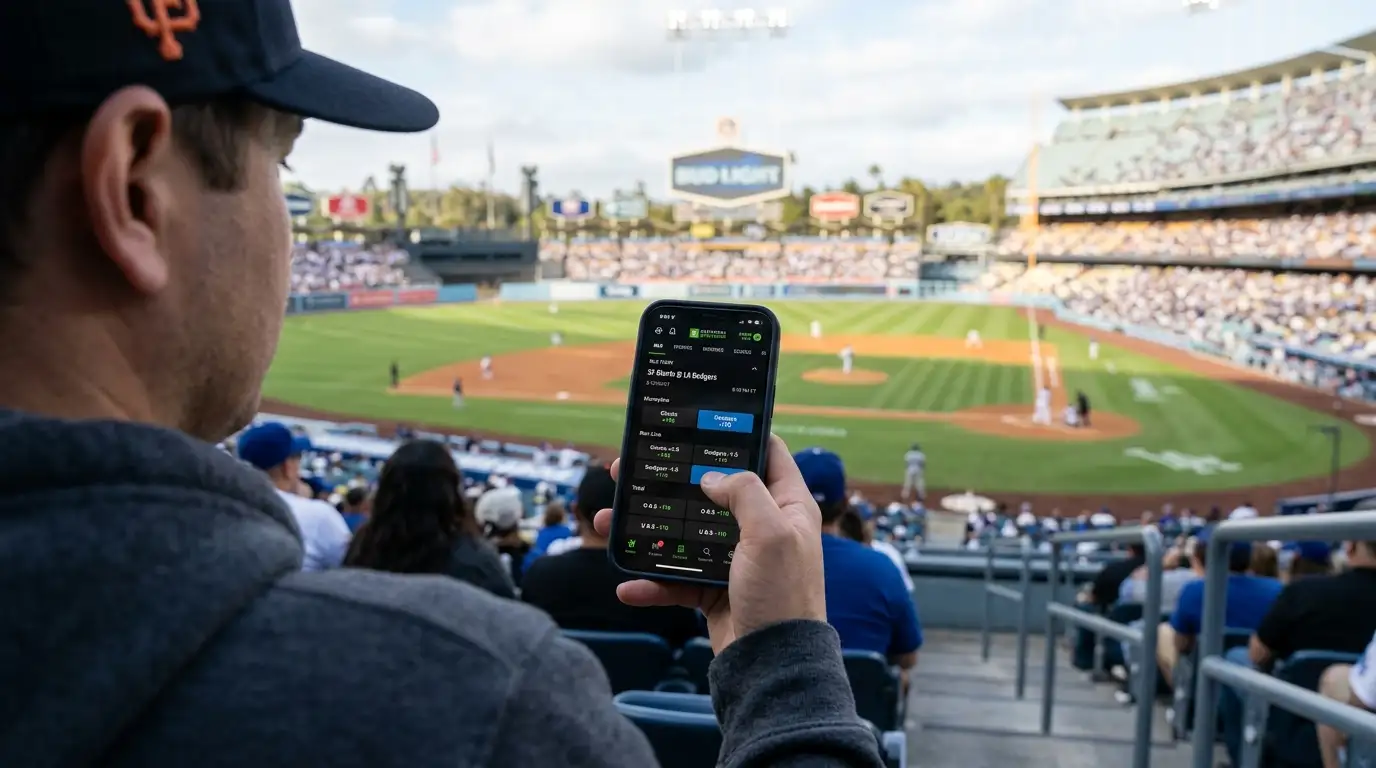
Every odds format encodes an implied probability. At decimal 2.50, the implied probability is 40%. At fractional 6/4, it is also 40%. At American +150, same thing. The format is irrelevant — the implied probability is the bookmaker’s statement of how likely they believe an outcome is, adjusted upward to include their margin.
The average hold percentage in US sports betting reached 10.15% in 2025. UK sportsbooks operate with similar margins on baseball, though the exact figure varies by operator and market type. That margin manifests as overround — the total implied probability across all outcomes exceeding 100%. A two-way moneyline market with an overround of 106% means the bookmaker has built in approximately 6% edge. Your task is to find individual lines where the bookmaker’s implied probability is lower than the true probability by more than the margin.
Building your own probability model does not require a data science degree. Start with a simple framework: look at each team’s recent win rate over the past 30 games, adjust for starting pitcher quality using FIP, and factor in home/away splits. This crude model will disagree with the bookmaker on 3-5 games per day. Most of those disagreements are within the margin of error. The ones that diverge by 5+ percentage points are your candidates.
One mistake I made early on was treating my model’s output as truth. It is not. It is an estimate, just like the bookmaker’s price is an estimate. The value lies in the gap between two imperfect estimates. When both point in the same direction — your model says 45% and the market implies 38% — the signal is strong. When they are close — your model says 45% and the market implies 43% — there is no actionable gap, and the correct play is to skip the game entirely.
Reading Line Movement: What Sharp Money Tells You
Last August I watched a line on an unremarkable Tuesday afternoon game move from -120 to -145 in the space of 90 minutes before first pitch. Nothing in the injury reports had changed. The weather was unchanged. The lineup was as expected. What happened was sharp money — professional bettors with consistent track records — loaded one side, and the sportsbook adjusted the price to balance their exposure.
Line movement is the market talking. When a line moves against the public — for example, a popular favourite gets cheaper while an ignored underdog gets more expensive — it usually means informed bettors are on the underdog. This is called “reverse line movement” and it is one of the most reliable signals in baseball betting.
The mechanics work like this. Sportsbooks set opening lines to attract balanced action on both sides. As bets come in, the book adjusts. If 70% of public tickets land on the favourite but the line moves toward the underdog, the book is responding to the dollar volume, not the ticket count. A small number of large, sharp bets outweigh a large number of small, recreational bets in terms of price impact. Following dollar movement rather than ticket percentages is a fundamental shift that most casual bettors never make.
Tracking line movement requires checking odds at multiple sportsbooks throughout the day. Opening lines typically post around 10-11 AM UK time for that evening’s MLB games, with final lines settling at first pitch (usually 11 PM to 1 AM UK time for East Coast games). The window between opening and closing is where all the information flows. If you check the line once and bet immediately, you are flying blind to hours of market intelligence.
Closing Line Value as a Performance Benchmark
Forget your win rate. Forget your profit graph. The single best indicator of whether you are a skilled bettor or a lucky one is closing line value — CLV. If you consistently beat the closing line, you are finding value. If you do not, variance will catch you eventually.
Closing line value measures whether the odds you received were better than the odds available at the moment the game started. If you backed an underdog at +140 and the closing line was +125, you captured 15 cents of CLV. That means the market moved in your direction after you bet, confirming that the informed consensus agreed with your position.
About 28% of MLB games finish with a margin of exactly one run. That one-run margin means many games are essentially coin flips in the late innings, and a single swing can determine whether your bet wins or loses. Over a small sample, results are noisy. Over a season of 500+ bets, CLV separates signal from noise. A bettor with 52% wins but no CLV is running above expectation and will regress. A bettor with 48% wins but consistent CLV is running below expectation and will improve.
I track CLV for every bet I place, and I review it monthly. The discipline is unglamorous — it requires logging your odds at time of bet, then checking the closing odds after the fact. But it is the single most honest assessment of skill in sports betting, and it works especially well in baseball because the high game volume gives you a robust sample within a single season. Pair CLV tracking with the probability gap analysis from understanding how odds formats encode value and you have a complete feedback loop: identify value, bet value, measure whether your identification was accurate, and refine.
See also: betting for baseball for more ways to find profitable odds.
When the Edge Is Not There, Walk Away
Senior analyst Adam Woodhead has noted that two UK policy moves through 2026 are pushing the spread-bet tax advantage wider, not narrower — the capital gains tax annual exempt amount has fallen 76% in two years. That observation highlights a broader truth: the rules of the game keep changing, and bettors who adapt survive while those who force action get ground down.
The hardest part of value betting is inaction. MLB offers 15 games on a typical day, and every game has multiple markets. The temptation to find value in every slate is enormous, especially during a losing streak when you want to “get even.” But value either exists in a line or it does not. Forcing a bet where no gap exists is negative expected value by definition, and compounding negative EV across dozens of unnecessary bets will destroy a bankroll faster than any bad beat.
My rule is simple: if my model and the market agree within three percentage points, I do not bet. On an average day, that eliminates 10-12 of the 15 available games. The remaining 3-5 games with actionable gaps form my daily card. Some days, zero games qualify, and I place zero bets. Those days are not wasted — they are the discipline that makes the profitable days possible.
What does closing line value mean in baseball betting?
Closing line value measures whether the odds you took were better than the final odds at game time. If you bet an underdog at +140 and the line closed at +125, you captured positive CLV. Consistently beating the closing line is the strongest indicator of long-term betting skill.
How many bookmaker accounts do I need for effective line shopping?
Three to five UKGC-licensed accounts covering baseball markets is a practical minimum. Odds on the same MLB game can vary by 10-20 cents between operators, and that difference directly impacts whether a bet has value. More accounts mean more price comparison opportunities.
Published by the Betting for Baseball team.